
Placenta previa is an important pregnancy condition that requires early diagnosis to help determine the safest method of delivery. Understanding the causes of placenta previa, symptoms, and treatment options can help pregnant women receive appropriate care and reduce potential complications.
What is the placenta?
The placenta is an organ that develops inside the uterus during pregnancy and remains there temporarily.
It attaches to the uterine wall and supplies the fetus with essential nutrients and oxygen through the umbilical cord.
It also removes waste products from the fetus and releases hormones that help maintain the pregnancy.
However, abnormalities affecting the placenta may lead to various complications during pregnancy.
What is placenta previa?
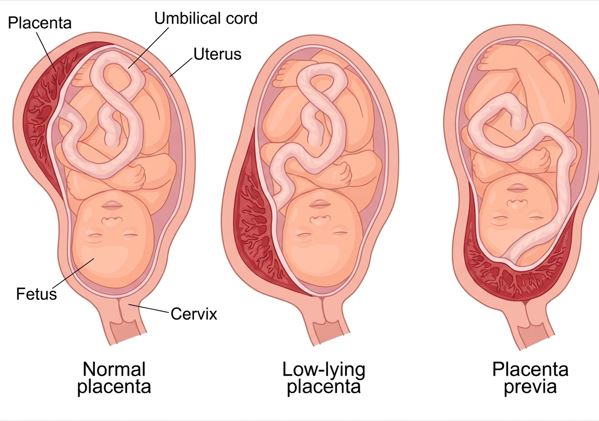
To understand placenta previa and its causes, it helps first to compare the normal position of the placenta with abnormal placental positions.
Normal placenta
Usually, in most pregnancies, the placenta is attached to the upper part of the uterus or along one of its sides, away from the cervical opening.
This allows the baby to pass through the birth canal during vaginal delivery.
This is the normal placental position in most pregnancies.
Low-lying placenta
In this condition, the placenta is positioned lower in the uterus.
It is close to the cervix; however, it does not completely cover the cervical opening.
As the pregnancy progresses and the uterus grows, the placenta may move farther away from the cervix, and this resolves the condition.
Therefore, having a low-lying placenta does not necessarily mean that it will remain a problem throughout pregnancy.
Placenta previa
Placenta previa is an abnormal position where the placenta is located in the lower part of the uterus and may partially or completely cover the opening of the cervix, with no specific causes of placenta previa.
This can block the baby's passage through the birth canal.
If the placenta continues to cover the cervical opening near the end of pregnancy, a cesarean delivery is usually the safest option.
Types of Placenta Previa
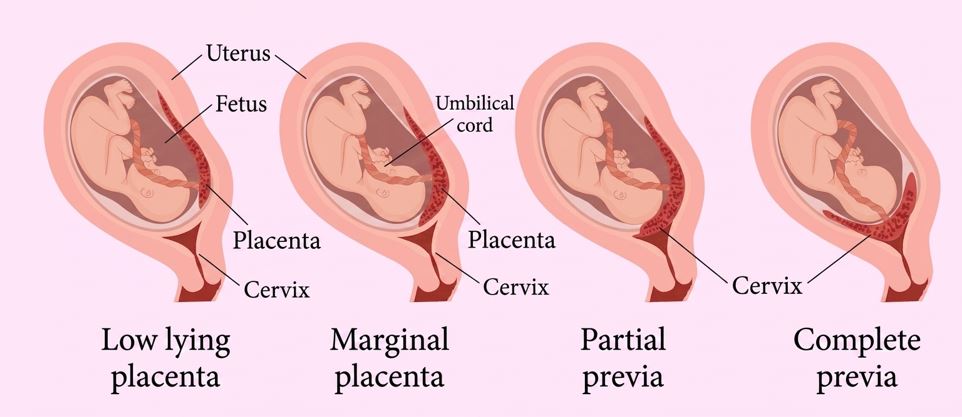
According to the coverage of the cervix, it is classified into:
1. Marginal Placenta Previa
The placenta reaches the edge of the cervix but does not cover it.
It has the highest chance of resolving before delivery.
2. Partial Placenta Previa
The placenta partially covers the cervical opening.
3. Complete (Total) Placenta Previa
The placenta completely covers the cervix.
Usually persists until delivery, Vaginal delivery is generally not possible.
Causes of placenta previa
There are no certain causes of placenta previa, but there are risk factors that may increase the risk of this condition.
Risk factors:
- Being pregnant several times before.
- Smoking during pregnancy.
- Previous uterine surgery, such as a cesarean section (C-section) or dilation and curettage (D&C), a procedure used to remove tissue from the uterus.
- Pregnant with twins or triplets.
- Having uterine fibroids
- A history of placenta previa in a previous pregnancy.
These risk factors are currently the closest indicators available to the causes of placenta previa, even though no single definitive cause has been identified
When to suspect placenta previa? The most important symptom is sudden, painless vaginal bleeding. The blood is usually bright red.
Symptoms of Placenta Previa: When to Start Seeing a Doctor
- Bleeding occurs in the second or third trimester, and it may be triggered by minor activity such as coughing, physical exertion, or intercourse.
- Bleeding that stops and starts again — a pattern in which bleeding occurs, subsides on its own, then recurs days or weeks later — is a strong indicator.
- The presence of risk factors may provide insights into the causes of placenta previa; therefore, women with known risk factors warrant closer monitoring and earlier evaluation if any bleeding occurs.
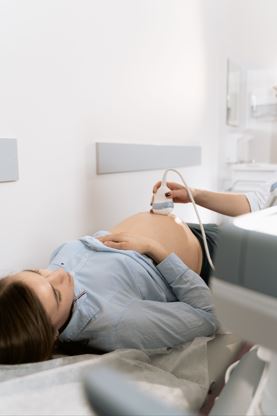
- Incidental discovery on routine prenatal ultrasound: In many cases, before any symptoms appear at all.
This is why awareness of the causes of placenta previa remains essential even before symptoms appear.
Treatment of placenta previa
Because the exact causes of placenta previa are not fully known, treatment does not target a specific underlying cause.
Instead, it focuses on reducing the risk of complications, monitoring the mother and baby, and safely continuing the pregnancy for as long as possible.
If placenta previa is diagnosed early in pregnancy, it may resolve on its own as the uterus grows and the distance between the placenta and cervix increases.
For this reason, regular ultrasound examinations are usually recommended to monitor the position of the placenta.
The treatment approach depends mainly on whether there is vaginal bleeding, how severe the bleeding is, the gestational age, and the health of both the mother and baby.
Treatment when there is no bleeding
Since the causes of placenta previa are not fully understood, treatment in these cases focuses on monitoring the pregnancy and reducing the risk of bleeding.
Depending on the location of the placenta and the individual case, the healthcare provider may recommend:
- More frequent prenatal visits and ultrasound examinations.
- Avoiding strenuous physical activities and heavy lifting.
- Avoiding sexual intercourse if advised by the healthcare provider.
- Limiting activities that may increase the risk of bleeding.
Treatment when there is bleeding
If bleeding is significant, the mother and baby may need to be monitored in the hospital. Treatment may include:
- Blood transfusions if there is significant blood loss.
- Corticosteroid injections to help accelerate the baby's lung development when preterm delivery is a possibility.
- Medication to delay preterm labor in selected cases, depending on the severity of bleeding and the condition of the mother and baby.
- Emergency C-section if bleeding is severe or cannot be controlled, or if the health of the mother or baby is at risk
Placenta previa is a condition that requires careful monitoring throughout pregnancy.
Understanding the causes of placenta previa and assessing its severity and timing can help guide the appropriate management.
In some cases, the placenta may move away from the cervix on its own, allowing for a vaginal delivery, while in other cases, a cesarean section (C-section) may be recommended to ensure a safe delivery.


You must be logged in to post a comment.